





“Why the word ‘queer’ when that is a word others have used to describe us and not always kindly,” Kazim Ali, the editor of On the Brink of Belief, writes in his introduction. Born from the rich writing halls of The Queer Writers’ Room, a creative writing and cultural exchange program under the umbrella of The Queer Muslim Project in collaboration with the International Writing Program at the University of Iowa, On the Brink of Belief is an anthology that brings together 24 emerging queer and trans storytellers from across Bangladesh, India, Nepal, Pakistan and Sri Lanka. Spread across four sections, the stories, poems, memoirs, poetry-prose, and essays are singed with sadness, betrayal, grief, hurt and ignominy amid the looming umbrella of censorship – both in their public as well as private spaces. The very event of this collection is one worth celebrating, and it delivers on much of its bold promise, too.
Breathless beauty of a distant memory
In “You Often Forget That I am Queer When You Kiss My Lips”, Dia Yonzon writes, “Last December you could not get your hands off of her, so I knew that you were not shy about your lovers. Is it that every time you kiss me, you are reminded that I am queer, I asked?”. Some of the writing in this anthology reveals powerful subtexts used to conceal innocent realities. “I want grief to come and sit beside me and I’ll tear at her hair and skin to no avail – she’ll sit and sit with me to paint the placental cloth between us so I can touch it-so I know that’s how it goes,” writes Sara Haque in the poem “Die Melancholie im Garten des Lebens, or Melancholy in the Garden of Life”, inspired by a painting by Mathis Gerung. Kazim Ali, in his poetry-prose, “Failed Zuihitsu”, writes, “One never knows what may break in the heart when one tries to write about the past,” and “Grief is a long, narrow road.” There’s something heavy about the weight of words unspoken in these lines. T
In “My Home Town is Untouched by You”, Kranti writes, “Tell me, God, what does it mean to fistfully care in this brief land of exchange?” Or Nil in “Hahakar” when he writes, “As I feel the emptiness inside me amplify and grow, I wonder if you will catch on.” The tattered memories in these sentences are reminiscent of a time that is fragmented, faded, and worn-out but never forgotten. These pages hold the poetry of old love, whispered secrets and passionate romance, a bittersweet feeling of what is now lost or forgotten. The most poignant stories of love and desire are those which never came close to fruition and hence live on forever as quests.
On the Brink of Belief hums the tune of survival despite suppression, deception and ambiguity. The queer protagonists and their muses of all 24 writers in this anthology seem to seek liberation from cultural purity, embodying resistance from outside influences.
The male voice in Amama Bashir’s short story “Hassan Bhai” rues, “We live in Mirpur, a city so small that everybody knows everybody; where Asad bhai’s multiple love affairs are an open secret and acceptable to all, but I cannot be allowed to love one man.” As a millennial contemporary reader, what hurts me is when writers who seek to tell the truth must resort to subversive language for fear of retaliation. This continues to be true despite some of South Asia’s historical and religious texts, which reveal a nuanced past when gender and sexual fluidities were acknowledged and often celebrated. This strangeness between religious texts and our interpretation of it can be found in many sentences: “As I continue on my journey, I am reminded that my strength and courage come from my unwavering belief in the knowledge that Allah loves me just as I am,” writes Adnan Shaikh in “The Beauty and Complexity of Being Queer and Muslim”.
The poignancy of expressions
On the Brink of Belief stands out not as much for traditional literary merit as it does for its poignant and deeply moving stories. It is easily one of the more powerful books that has been published in recent times. The power of grief, loneliness, and vulnerability in this anthology demands to be heard, read and felt by everyone, and not just queer and trans people. As a humanist, I believe that in an increasingly politically and personally prejudiced world, voices like these are needed for humanity to prevail.
In its articulation of unexpected and often painful desire, it joins a poignant South Asian tradition of queer literature. In “My Sunset Marriage: One Hundred and One Poems”, Hoshang Merchant has vividly explored gay love and sexuality through poems written over forty years. R Raj Rao’s chronicling of homosexual love, masculinity, caste, class, religion and India’s gay subculture in The Boyfriend and Crocodile Tears has been delicious and unsettling at the same time. In Same-Sex Love in India: A Literary History, the editors Ruth Vanita and Saleem Kidwai have traced homoerotic love through the historical lens of written Indian traditions. While in Saikat Majumdar’s novel The Scent of God, two teenage boys fall in love with each other while studying at a Hindu monastic boarding school, Siddharth Dhanvant Shanghvi’s Last Song of Dusk searches for the multicoloured manifestations of love between two highly talented artistic women. And most recently, Arundhati Ghosh has explored themes of disruptive sexualities in her book All Our Loves: Journeys With Polyamory in India.
The common theme that emerges from these writings is how it allows us to break free from the metaphors of identity and experience while understanding our sexuality in more fluid ways. In ways that are both lyrical and broken, it reminds us that our identities are dynamic and complex and not yoked to any term. Saikat Majumdar captures this fluidity in The Remains of the Body unforgettably: “Human beings were forms etched on water. Shapeless, slippery forms you were stupid enough to love. That’s how you knew you were still alive.” And as Anais Nin had said before him, “And the day came when the risk of remaining tight in a bud was more painful than the risk it took to blossom.”
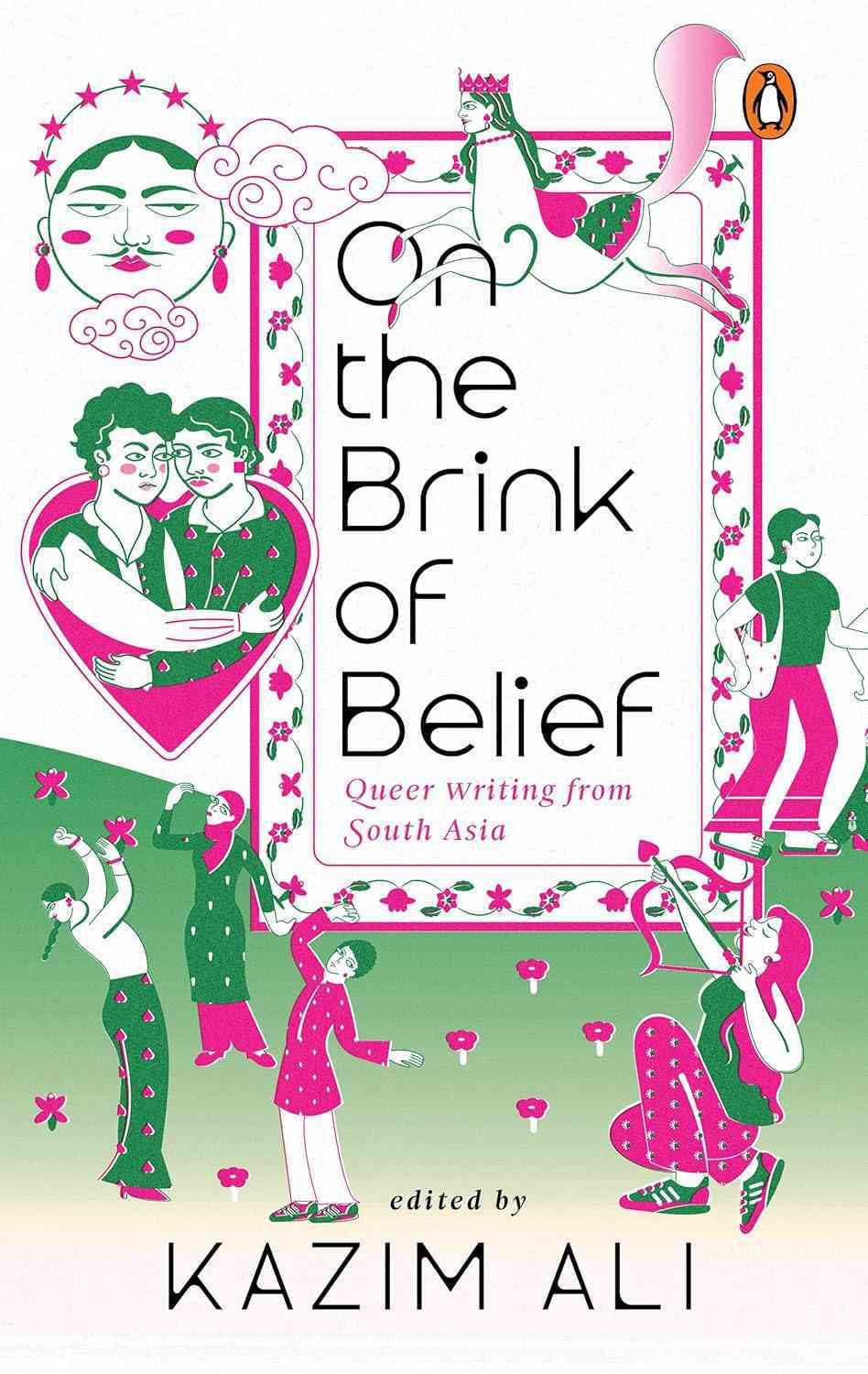
On The Brink Of Belief: Queer Writing From South Asia, edited by Kazim Ali, Penguin Books.
